B2B marketing: where B2C stops and the real work begins
Nobody ever sold anything to a company. You sell to the people inside it. Five elements that build the trust a business decision actually requires.


At its core, B2B marketing works the same way as B2C marketing. In this article we go through what you can do specifically, business to business, to get the most out of your marketing budget.
Picture yourself in two situations
In the first, you buy a can of cola during your lunch break. In the second, you have to enter into a new partnership with a payroll administration company.
Two very different situations. But one thing should strike you immediately: the context is different, and you are still a buyer.
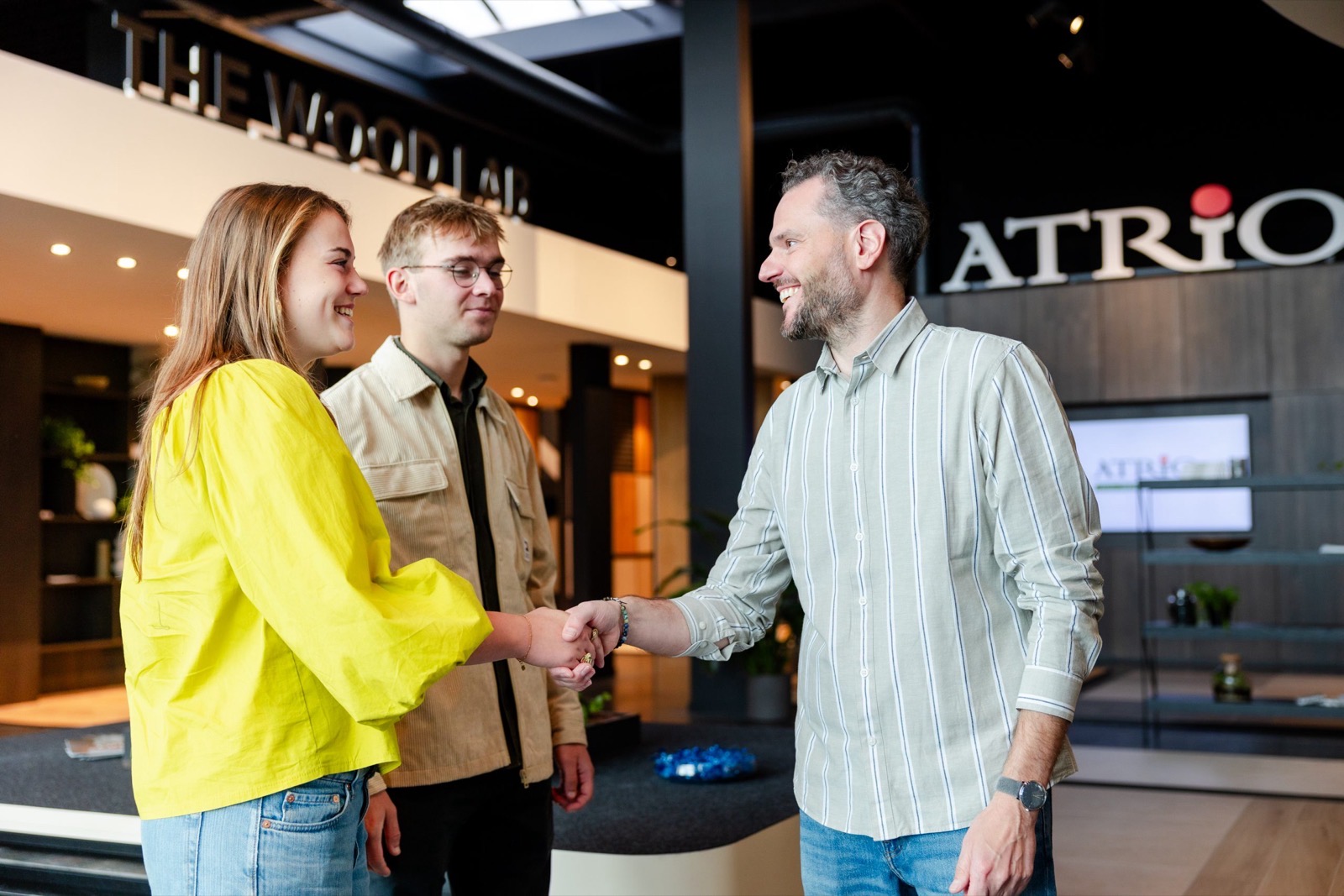
That is the first lesson. When we sell something, we always sell to a person, never to a company. Hence the well-worn line that there is no B2B or B2C, only human to human. It is never a company that buys from us, it is the person or the people inside that company.
How you become a company’s customer
Think about your own purchases. As a consumer we buy simple products from faceless companies every day. But when did you last do that as a business leader? When did you last make a large investment without first having a conversation with somebody from the other company? Hopefully never.
Business decisions are not taken lightly, so it makes sense that you want to go through them personally.
And on the other hand: what would you even ask about a can of cola? You already know everything you need to know.
Consumers buy brands
It is just a can of cola. As long as we see a familiar brand on the packaging, we know we are fine. Nothing special, nothing new, no opportunity and no risk. It is the most ordinary thing in the world, so we do not think about it any further.
B2B decisions are nothing like that.
Why that does not work in B2B
Compare it to finding a new company to handle your payroll. The partner you choose will have a big impact on your entire business for years. So what if those people make a mistake? What if the collaboration goes badly? What if you find out you are paying far too much? What if they cannot do everything you need? What if you made the wrong call and all your colleagues know it?
There is a great deal more attached to it, both for you and for the company.
The B2B process
Which is why you will not only look at the brand name when choosing a new partner. You will compare several companies, compare service packages, and probably talk to more than one of them. You want to be completely certain you are making the right decision.
But how can you be certain?
The heart of B2B marketing is trust
Every company makes more or less the same promise: to be the best for your business. Which means the question is no longer “who makes the best promise?” but “who do I trust to keep their promise?”
Five elements of strong B2B marketing
Trust is an extra layer on top of your standard campaign. The basis stays the same: you still want to present your product in its most attractive form with its best examples in the spotlight. Then you add these five.
1. Personal communication
With every sale you make as a company, you want to create a personal point of contact for your customer, somebody they can turn to, from the first moment.
We want to make a connection with the customer as fast as possible, person to person. So you want all communication between your company and your customer to come from a personal perspective. That means writing your ads, your web copy, your brochures and your emails in a personal, conversational tone in the name of your contact person, rather than in an impersonal corporate tone in the name of a faceless company.
Stay professional, stay serious, but communicate human to human. It is the fastest route to trust.
2. Anticipating questions
When you present your product or service to somebody, certain questions come back almost every time. Some of them are questions you would rather not answer.
But one thing is certain: your customers want an answer. If they do not get one, their trust takes a hit.
Use your copy to answer those questions before your customer asks them and you build an enormous amount of trust.
3. Making your process clear
The most important question to anticipate is: how does all of this actually work?
As humans we evolved to be afraid of the unknown. And yet many companies answer with a version of “do not worry about it, we will take care of it.”
That creates distrust immediately. It is vague and unclear, which is something companies do far too often in their marketing. Never do that. Tell your customer exactly what to expect and tell them how it will work. Tell people how they will experience the process.
4. Real references
In the end you can say whatever you like, and that is what most companies do. So always make sure you put as many strong references from existing customers to work as you can.
A strong reference contains:
- the full name of the reviewer
- the name of their company
- the logo of that company or a photo of the reviewer
You do not want to leave any of those out. Give your prospect references they can verify and they will trust you.
5. A clear guarantee
Finally you want to take away the worry. After the previous four steps, your prospect will want to trust you. They only have to give themselves permission.
Nothing does that faster than a clear guarantee, a money-back promise for instance. There are other guarantees you can give depending on your product or service. The goal of any of them is to take away your customer’s concern.
To take ourselves as an example: we promise our clients a positive return, aiming at 300%. That often sounds unbelievable to clients who have never done marketing. They see our success stories and our references, and they want the results we sell, but somewhere it seems too good.
And we understand that. It is a normal concern, and one that disappears quickly with a clear guarantee.
Show your customer they can trust you, by trusting yourself.
In summary
When we think about business we often think about impersonal communication. The point of this article is that it is exactly the opposite.
B2B is about relationships, while B2C is about convenience. In B2B you are going to work together with companies, you will have to rely on each other, and your success depends on one another.
So build trust with those five elements:
- address prospects personally, human to human
- anticipate questions and objections
- make your process and your way of working clear
- show rock-solid references
- give a guarantee that takes away every concern
An extra advantage of marketing this way is that it does not lead to sales conversations, but to two companies meeting to genuinely look at what they can mean for each other. Which, in our view, is how business should work.
In short
What is the difference between B2B and B2C marketing?
B2B and B2C marketing share the same core, because you always sell to a person, never to a company. The difference is context: B2C is about convenience, as consumers buy familiar brands without much thought. B2B is about relationships, because a business partner affects the whole company for years, so buyers compare options, talk to suppliers and need trust.
How do you build trust in B2B marketing?
B2B marketing builds trust with five elements on top of a standard campaign: communicate personally, human to human, in the name of a contact person; answer questions and objections before prospects ask them; make your process clear; show verifiable references from existing customers; and give a clear guarantee, such as a money-back promise, that takes away the customer's concern.
What makes a strong customer reference in B2B?
A strong B2B customer reference contains three things: the full name of the reviewer, the name of their company, and either the company logo or a photo of the reviewer. None of those should be left out. References a prospect can verify build trust, because most companies make the same promise and buyers want to know who will actually keep it.
Team Stigo, Stigo Digital Agency
Writes about what actually happens inside the campaigns we run from our own location in Antwerp. Questions about your own numbers? Book a call.